

Google Pulls AI From Google Earth After 24 Hours of Satellite Deepfakes
All blog articles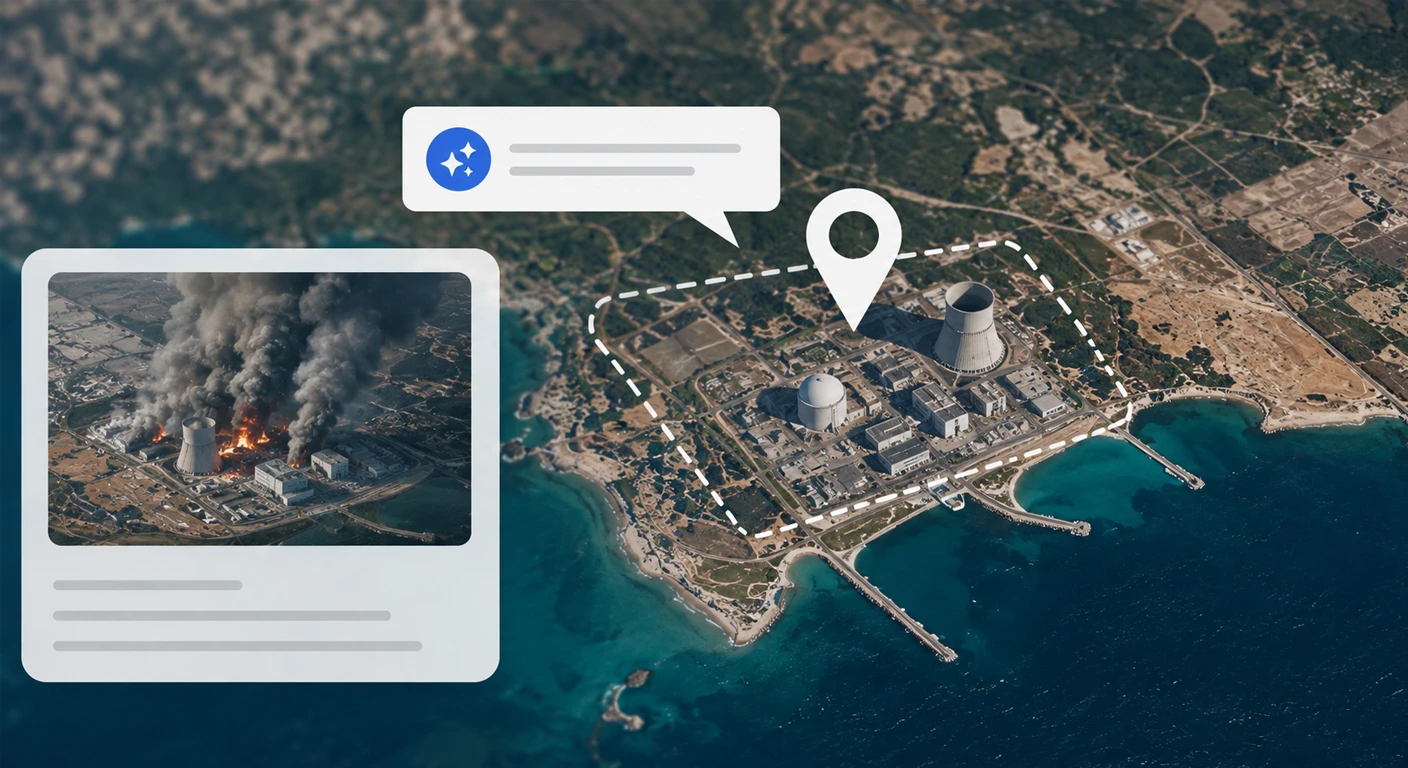
Twenty-four hours. That is how long anyone could fabricate satellite imagery inside Google Earth before Google pulled the plug.
What Nano Banana 2 actually did inside Google Earth
On July 30, Google wired its Nano Banana 2 image model into Google Earth on the web, worldwide and without a waitlist. Zoom to any coordinates, type a sentence, and the tool returned a photorealistic edit of that exact spot.
Satellite imagery has been kind of a safe bet because it's hard to fake.
Product manager Bryan Horowitz pitched it simply: pick a place, tap the create button, describe the scene you want. The official target was geospatial professionals and project visualization.
Fake refugee camps and a phantom nuclear plant in Iran
Within hours, researcher Henk van Ess planted fake refugee camps along the US-Mexico border, then a nuclear plant in Iran. NPR journalists set Kharg Island's oil terminal on fire and put the US Capitol under flood water. Other testers gave Cuba missile silos and carved a crater into the Kremlin.
Every image carried a SynthID watermark and never appeared in the public Earth layer. Yet Gemini itself could not always confirm an image's AI origin. One tester even slipped a fake past Hive's detector.
Why Google Earth deepfakes sting more than others
Satellite imagery is one of the last visual references people still trust online. Open-source investigators at Bellingcat and elsewhere rely on it to verify wars and disasters in unreachable regions. Jake Godin, a senior researcher there, notes these images were long considered very hard to fake.
Google acknowledged screenshots that "appear to violate our policies" and suspended the feature on July 31. The company frames this as a pause, with stronger guardrails to come, not a cancellation.
What the 24-hour retreat says about Google Earth
Credit where due: a one-day reversal beats the industry average. Still, Mountain View could have anticipated this scenario, especially after Meta fired back at Nano Banana 2 just weeks earlier. The next rollout will tell us whether guardrails can really hold on a map of the entire planet.
Why did Google remove the AI image feature from Google Earth?
Google pulled Nano Banana 2 from Google Earth on July 31, 2026, one day after launch. Users had generated fake war scenes, disasters, and sensitive infrastructure on top of real satellite maps.
Will AI image generation come back to Google Earth?
Most likely, yes. Google describes the removal as a temporary rollback and says the feature will return once stronger guardrails are ready.