

Google's AI Will Nudge Atlantic Flights to Erase Contrails
All blog articles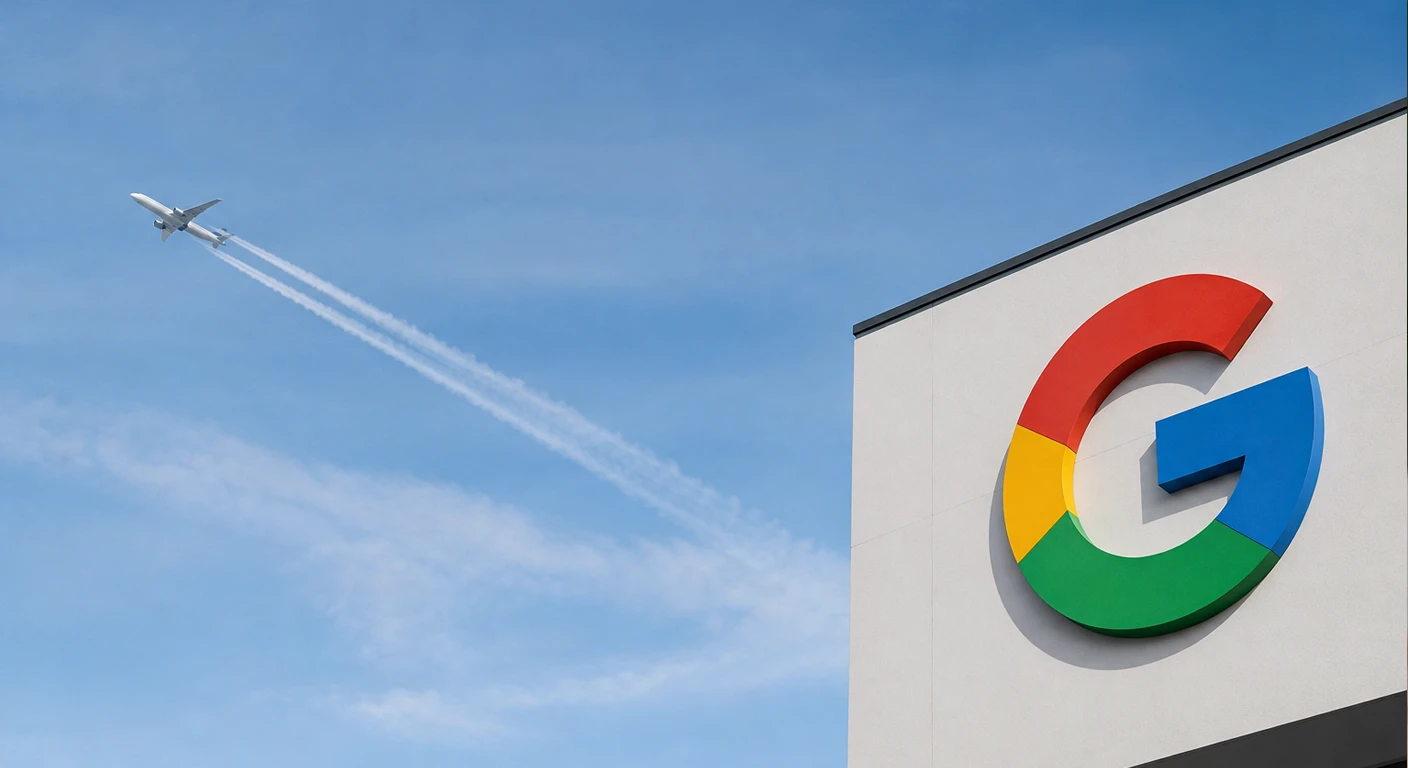
One third of aviation's climate impact does not come from burnt jet fuel. Blame the contrails, those long white lines that trap heat like a thin blanket over the planet. Google and the UK government now want to erase them, one flight at a time.
Operation Blue Skies takes contrails seriously
Announced on August 18, Operation Blue Skies unites Google, air traffic provider NATS, the Met Office, Imperial College London and Cambridge. The £5 million program includes £2.65 million from the UK Department for Transport.
Contrail avoidance could drastically reduce the global climate impact of aviation, at minimal cost to passengers and companies.
The test zone is Shanwick airspace, the eastern half of the North Atlantic corridor. That single patch of sky drives about 5% of global contrail warming.
How AI will steer flights around contrail zones
Google's models blend satellite imagery, weather data and flight paths to spot the cold, humid pockets where contrails persist. NATS controllers will then instruct selected flights to climb or descend roughly 2,000 feet.
Around 10,000 flights cross the zone during trial hours each year. Only 1 to 5% will get a detour, across two winters, 2026-2027 and 2027-2028, with 20 to 40 test days per season.
Why contrails matter more than you think
Persistent contrails account for roughly one third of aviation's total climate impact. At night they trap outbound heat and reflect nothing back to space. A lose-lose deal for the thermometer.
Next to new engines or sustainable fuel, this fix costs pocket change. Regulators keep handing AI real controls too: California already lets AI drive 40-ton semis. Here, Cambridge and Imperial will verify the climate results independently, so Google won't grade its own homework.
Why do contrails warm the planet?
Contrails form when water vapor from jet exhaust freezes around soot particles in cold, humid air. The persistent ones spread into cirrus clouds that block heat on its way out of the atmosphere.
When does Operation Blue Skies start?
Test maneuvers begin in the winter of 2026-2027, mostly on selected evenings and nights, with a second round the winter after. Results will then be published and reviewed by independent academics.