DistroKid
#29 in Music
« A music distributor offering AI functions such as automatic lyric transcription, an album cover generator (DistroPic), etc. »

Verified Tool
Similar AI Tools
 Suno V6
  Lyria 3.5
  Stable Audio 3.0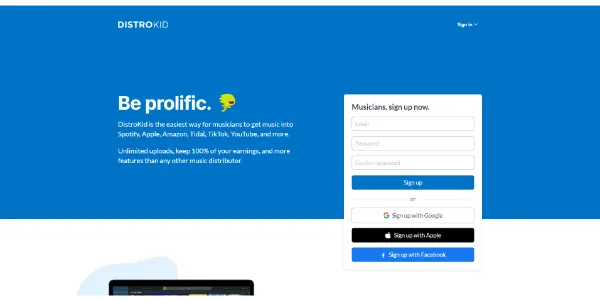


Updated on August 13, 2026
DistroKid is a music distribution service that sends your tracks to Spotify, Apple Music, Deezer and over 150 streaming platforms. Subscriptions run from $24.99 a year, with unlimited uploads and 100% of streaming royalties paid out to you. Founded in New York in 2013, the company says it distributes around 40% of all new music released worldwide. No commission is ever taken on what your songs earn from streaming.
DistroKid runs on a flat annual subscription instead of per-release fees, and takes no cut of your royalties. You upload the audio and artwork, fill in the credits, tick the stores you want, and the release heads into review. Speed built the company's reputation, with some tracks live within two days.
The math tilts fast in your favor. Three singles in a year and the plan already beats paying per release. Around 4 million artists go through the platform according to trade reports, from bedroom producers to people publishing output from AI music generators at a steady clip. Collaborator splits and HyperFollow pre-save pages come bundled in.
Musician, at $24.99 a year, covers one artist name but no custom release dates. Musician Plus, at $44.99, adds a second artist name, scheduled Friday releases and daily stats. Ultimate, at $89.99, stretches to 100 artist names, a setup built for small labels.
The real spending happens elsewhere, in the add-ons pitched during upload (right when you just want the song out, and the checkout knows it). These figures move around, so treat the distrokid.com pricing page as the only reliable reference.
| Add-on | Price | What it covers |
|---|---|---|
| Leave a Legacy | $29 per single, $49 per album, one-time | Catalog stays live after cancellation |
| YouTube Content ID | $4.95 per track per year, plus a 20% cut | Earnings when your music appears in other people's videos |
| Shazam and Siri | $0.99 per track per year | Song recognition on the fly |
| Store Maximizer | $7.95 per release per year | Automatic delivery to newly added platforms |
CVC Capital Partners announced a majority investment in DistroKid in July 2026, at a valuation reported around $2 billion by the music trade press. The deal, expected to close in the third quarter of 2026, keeps Insight Partners as a minority shareholder and Phil Bauer as president.
Day to day, nothing changes at upload time. Founder Philip Kaplan remains chairman, and the flat-fee model that made the service famous stays in place.
No, DistroKid has no free tier. The Musician plan costs $24.99 per year for unlimited uploads under one artist name, with no commission on streaming royalties. Optional add-ons, billed per track or per release, come on top depending on which features you switch on.
Your releases are removed from streaming platforms once the subscription ends. The Leave a Legacy option, a one-time $29 per single or $49 per album, keeps tracks live permanently even after you cancel. Worth weighing once a catalog starts earning steadily.
Both sell annual unlimited-release subscriptions starting at $24.99. DistroKid holds the edge on release speed and collaborator splits, while TuneCore leans on its publishing administration. For frequent, straightforward releases, DistroKid remains the most common pick among independent artists.
No. DistroKid pays out streaming and download royalties only. Songwriter and publishing money requires registering with a collection society in your country, possibly alongside a publishing administrator such as Songtrust. Skip that step and part of your income simply goes uncollected.
Verdict: Three singles a year and the subscription has already paid for itself. Independent musicians who release often and want every cent of their streaming income will feel at home here, from solo producers to small labels juggling several projects.

« An all-in-one creative platform that brings together more than 30 image and video models in a single interface. It includes camera controls that let you direct like a real filmmaker, characters that remain consistent from scene to scene, and ready-to-use tools for ads and short-form content »