

Your Brainwaves Could Be the Next Robot Training Dataset
All blog articles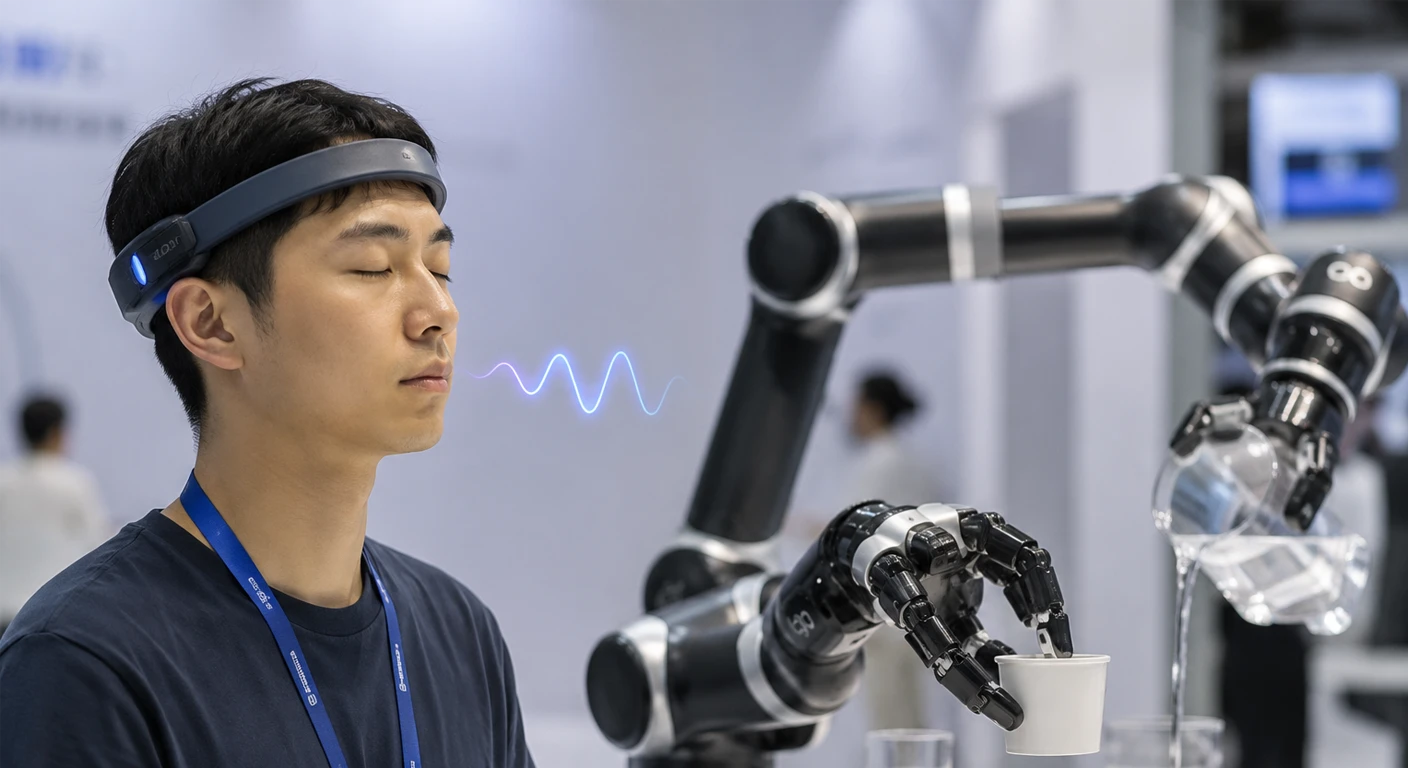
One thought did the job. At WAIC 2026 in Shanghai, a demonstrator put on an EEG headset and focused on a cup. A nearby robotic arm reached over and grabbed it.
No button, no voice, no movement. BrainCo picked July 17 to show what a decade of brain-computer interface work can do, and the booth drew crowds all week.
A brain-to-robot platform, no surgery required
The BCI unicorn unveiled what it calls the first integrated brain-to-robot R&D platform. A non-invasive EEG headset reads electrical signals from the scalp, then an AI layer converts intent into concrete robot actions.
That choice sets it apart from Neuralink and its surgical implants. The platform drives third-party humanoids, robotic arms, and robot dogs, and BrainCo says developers reach basic control in about ten minutes.
Your brainwaves as robot training data
The live demo was the appetizer. The real bet targets embodied AI's most stubborn bottleneck: the shortage of high-quality, real-world training data. Large language models had the whole internet as a textbook, robots have nothing comparable.
Machines need mountains of examples before they can fold laundry or grip an egg without disaster. BrainCo wants to capture human intent at the source, inside the brain, then mix it with physical demos and simulations.
Brain data collection raises real questions
The package includes a high-precision data glove and a dual-arm wheeled rig to record human gestures. Senior vice-president Nyx He argues that "the next decisive frontier is about how robots understand the humans they work with".
Still, brain activity may be the most personal data there is. Rules on storage and use of these recordings remain unclear, in China and elsewhere. The timing is notable, weeks before the first US-China AI talks in September.
How does BrainCo turn thoughts into robot training data?
BrainCo records EEG signals tied to a person's intended action, then combines them with physical demonstrations and simulations. These blended datasets are meant to teach embodied AI models faster than robot-only recordings.
Do you need a brain implant to control these robots?
No, the platform relies on a non-invasive EEG headset placed on the scalp, unlike Neuralink's surgical chips. BrainCo claims a developer can reach basic control in roughly ten minutes.