

44% of New Songs Are AI. The Industry Just Labeled Them
All blog articles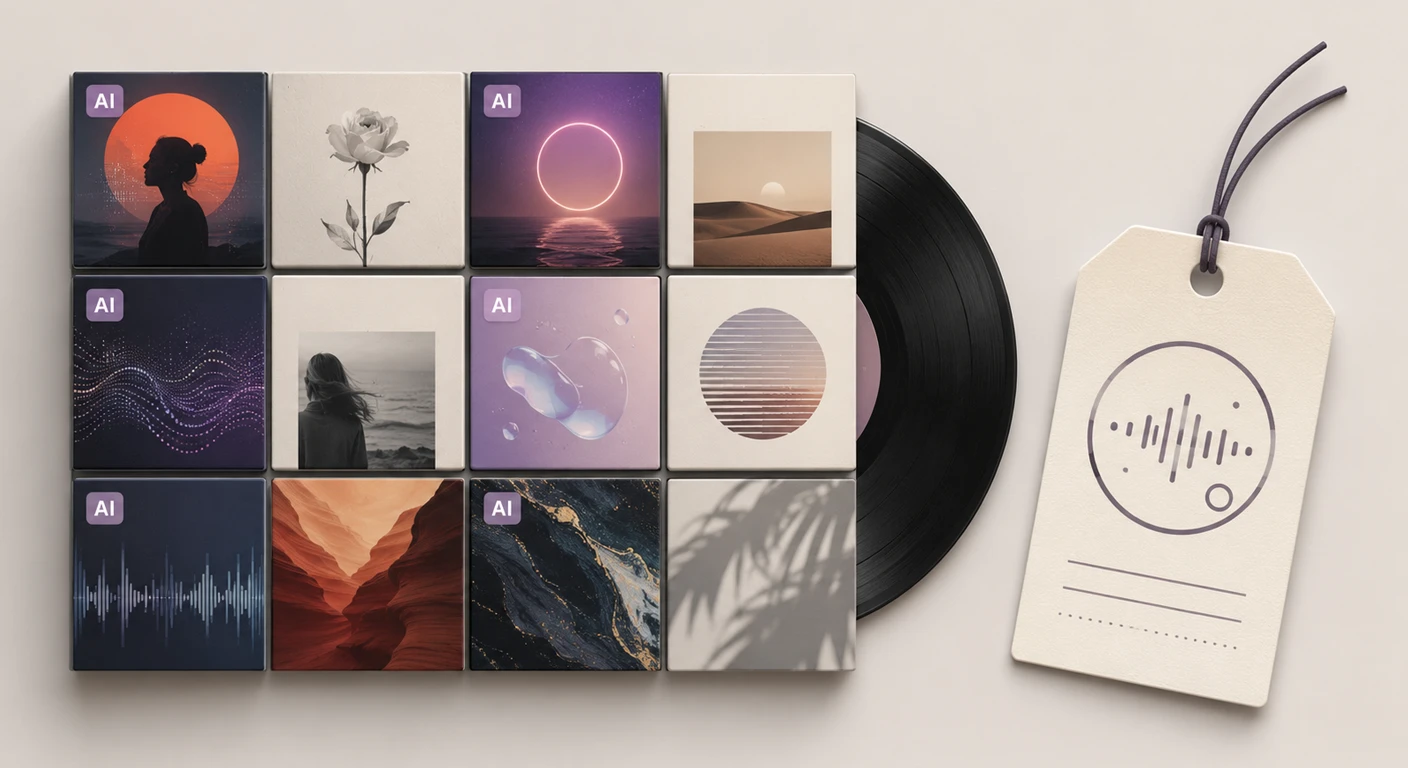
A third of new uploads on some streaming platforms were never touched by a human singer. On July 10, 2026, eight major music organizations rolled out a unified system of AI music labels for sound recordings, and the goal is simple: let fans know what they're actually hearing.
How the New AI Music Labels Work
IFPI, RIAA, A2IM, WIN, IMPALA, The Grammys, SAG-AFTRA and the Human Artistry Campaign announced a unified approach to voluntary track labeling, distinguishing between "AI-Generated" and "AI-Assisted" recordings. The first badge applies when AI was used to generate the entirety or the primary portion of the creative elements of the recording, while the second covers tracks created substantially by humans, with generative AI used only for some expressive elements.
Think of it as the "explicit" tag's cousin, except this one is trying to separate the real singer from the well-crafted prompt. For now, the system does not cover the use of generative AI in lyrics, composition, music videos or cover art, which leaves plenty of room for anyone hoping to dodge the label.
Why the Music Industry Moved Now
The timing tracks. In April, Deezer reported that AI-generated tracks made up 44% of all new music delivered to its platform, while Apple Music said more than a third of uploads were "100% AI". Deezer even rolled out an AI music detector in June that it claims is 99.8% accurate, a bold number that says nothing about what's slipping through everywhere else.
Honestly, it's hard to blame the industry for wanting some order here. The catch is that this whole system runs on self-reporting, and nobody is scanning every release on Earth to check.
Spotify, Apple Music, and Suno Are Still Hedging
The program depends entirely on rightsholders volunteering the information, and the Digital Media Association, which represents Spotify, Apple, and Amazon, made that gap clear by saying it mainly wants better metadata before committing further. Spotify already launched its own "Verified by Spotify" badge back in April to authenticate artist profiles, but the company declined to comment on this latest announcement.
Suno, one of the most widely used AI music generators, pushed back gently too: the company says transparency matters, but argues it should be up to artists and platforms to decide how to handle these complex issues. That guarded response says a lot about the real fight ahead, one between legacy labels and generative tools like Suno and Udio.
Are the new AI music labels mandatory?
No, the system announced by IFPI and RIAA is entirely voluntary and relies on artists, labels, and distributors to self-report AI use, with no legal requirement in the United States.
What's the difference between "AI-Generated" and "AI-Assisted" labels?
An "AI-Generated" track was created entirely or mostly by AI, including the lead vocal, while an "AI-Assisted" track is still performed by humans who used AI only for select secondary elements.