

AI Is Cracking Animal Language Across Six Species: The Dr. Dolittle Machine Is Real
All blog articles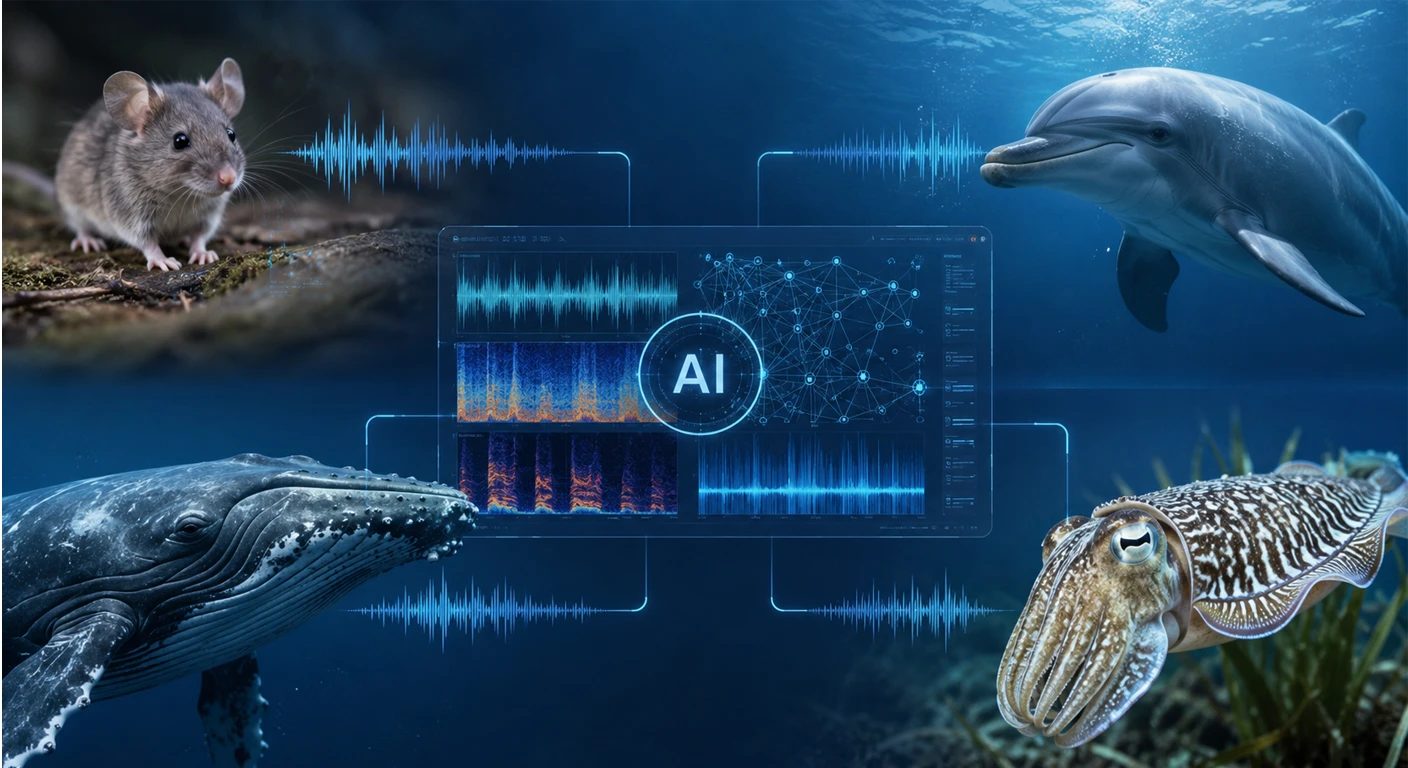
From African mice squeaking at frequencies we cannot hear to sperm whales clicking in the Caribbean, researchers are training neural networks to decode vocal patterns across six animal species. The Dr. Dolittle dream just got a serious scientific upgrade.
AI cracking animal communication across species
A comprehensive CNN report published today details breakthroughs in mice, dolphins, great apes, birds, whales, and cuttlefish. Researchers used artificial neural networks, the same architecture behind ChatGPT, to uncover individual and colony-level vocal signatures hidden in animal sounds.
Nicolas Mathevon, a professor at the University of Saint-Étienne in France, recorded over 122,000 squeaks from African striped mice and identified at least seven distinct call types. Each nest has its own acoustic fingerprint, completely inaudible to the human ear.
The Coller Dolittle Prize fuels the race
Since 2025, the Coller Dolittle Prize has offered $100,000 annually for the best advances in interspecies communication. The grand prize stands at $10 million in equity for any team that achieves confirmed two-way communication with an animal.
Last year's inaugural winner was Laela Sayigh's team from Woods Hole Oceanographic Institution. They discovered that dolphins' non-signature whistles may function like shared words with context-specific meaning. The 2026 finalists, set to be announced June 25, include teams studying great apes in Africa and zebra finches in California.
Project CETI and Earth Species Project lead the charge
Two major organizations anchor this field. Project CETI, founded by National Geographic Explorer Dr. David Gruber, has uncovered a phonetic alphabet in sperm whale clicks off the coast of Dominica. The Earth Species Project, co-founded by Mozilla's Aza Raskin, is building the first multi-species language model covering crows, beluga whales, and elephants.
Talking to animals: real but humbling
Professor Yossi Yovel, who chairs the Dolittle Prize jury, keeps expectations grounded. Your future chat with your cat will likely be a short one. Still, even partial comprehension could reshape conservation, farming, and our relationship with the natural world. AI can already translate between unknown human languages: the next frontier has feathers, fins, and tentacles.